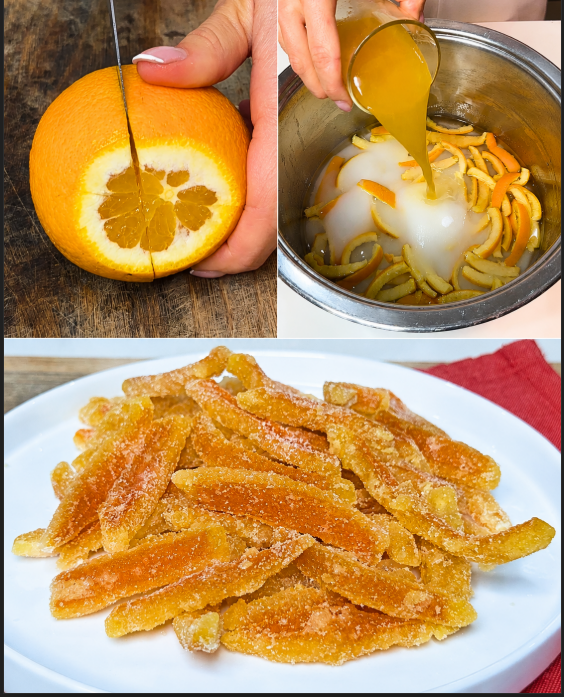
Candied Orange Peels: The Ultimate Homemade Citrus Candy Recipe
Candied orange peels are one of the most delicious and traditional homemade treats you can prepare in your kitchen. Sweet, chewy, fragrant, and coated in sparkling sugar, these citrus candies are loved around the world for their incredible flavor and versatility.
Made with simple ingredients like fresh oranges, sugar, water, and orange juice, candied orange peels are an excellent way to reduce food waste while creating an elegant dessert or snack. Whether you enjoy them on their own, use them in baked goods, or dip them in dark chocolate, they always deliver a bright citrus aroma and irresistible sweetness.
In this complete guide, you will learn everything about homemade candied orange peels, including their history, benefits, ingredients, step-by-step instructions, storage tips, variations, serving ideas, and expert techniques to help you achieve perfect results every time.
What Are Candied Orange Peels?
Candied orange peels are strips of orange skin that are boiled to reduce bitterness and then slowly simmered in sugar syrup until they become soft, translucent, and sweet. After drying, the peels are coated in granulated sugar to create a chewy citrus candy with a rich orange flavor.
This classic treat has been popular in European kitchens for centuries and remains a favorite during holidays and festive celebrations.
Candied orange peels can be enjoyed in several ways:
- As a sweet snack
- Chopped into cakes and cookies
- Used in fruit bread and panettone
- Added to desserts and pastries
- Decorated with chocolate
- Served alongside coffee or tea
Their sweet and slightly zesty flavor makes them incredibly versatile in both home baking and gourmet desserts.
Why Homemade Candied Orange Peels Are So Popular
Homemade candied orange peels have become increasingly popular because they are simple, affordable, and naturally flavorful.
A Great Zero-Waste Recipe
One of the biggest advantages of this recipe is that it transforms leftover orange peels into something delicious instead of throwing them away.
Made With Simple Ingredients
You only need a few pantry staples:
- Oranges
- Sugar
- Water
- Orange juice
No preservatives or artificial ingredients are required.
Perfect for Holidays and Gifts
Candied citrus peels are often associated with Christmas baking and holiday desserts. They also make beautiful edible gifts when packaged in jars or decorative boxes.
Naturally Vegan and Dairy-Free
Traditional candied orange peels contain no dairy products, making them suitable for many dietary preferences.
Incredible Flavor and Aroma
The natural oils found in orange peels create an intense citrus fragrance that fills the kitchen during cooking.
The History of Candied Citrus Peels
Candied fruit has a long culinary history dating back centuries. Before refrigeration existed, people used sugar and honey to preserve fruits and extend their shelf life.
Candied citrus peels became especially popular in Mediterranean countries where oranges, lemons, and other citrus fruits were abundant.
In Italy, France, and Spain, candied orange peels became essential ingredients in traditional pastries and festive desserts. Italian panettone, for example, often includes candied citrus pieces for added sweetness and aroma.
Over time, candied peels evolved from a preservation method into a beloved confection enjoyed around the world.
Ingredients for Candied Orange Peels
This easy homemade recipe uses only a few ingredients.
Ingredients
- 3 large oranges
- 200 g sugar
- 120 g orange juice
- 340 g water
- Extra granulated sugar for coating
Choosing the Best Oranges
The quality of your oranges will greatly affect the final flavor.
Use Organic Oranges Whenever Possible
Because the peel is the main ingredient, it is best to use untreated organic oranges free from wax and pesticides.
Best Orange Varieties
The following varieties work especially well:
- Navel oranges
- Valencia oranges
- Blood oranges
- Cara Cara oranges
Choose oranges with thick, fragrant skins for the best results.
How to Make Candied Orange Peels
Making candied orange peels is easier than many people think. Follow these detailed steps carefully for perfect homemade citrus candy.
Step 1: Wash the Oranges Thoroughly
Start by washing the oranges very well under running water.
Since the peels will be eaten, removing dirt and residue is extremely important.
You can gently scrub the surface with a brush to clean the skin more effectively.
Step 2: Peel the Oranges
Carefully peel the oranges while trying to keep the peel in large sections.
A sharp knife or vegetable peeler works best for this process.
Try to keep some of the white pith attached to the peel because it helps create a softer texture during cooking.
Step 3: Remove the Bitterness
Place the orange peels into a pot and cover them completely with water.
Bring the water to a boil and cook for about 8 minutes.
This blanching process helps remove much of the bitterness naturally found in citrus peels.
Step 4: Cool the Peels
Drain the peels immediately and transfer them into cold water.
Cooling the peels quickly helps preserve their bright orange color and stops the cooking process.
Step 5: Slice the Peels Into Strips
Once cooled, cut the peels into thin strips.
You can make them:
- Thin for delicate candy strips
- Thick for chewier pieces
The size depends entirely on personal preference.
Step 6: Prepare the Sugar Syrup
In a saucepan, combine:
- Water
- Sugar
- Orange juice
Stir until the sugar dissolves completely.
This syrup will slowly infuse the peels with sweetness and flavor.
Step 7: Simmer the Orange Peels
Add the sliced orange peels to the syrup.
Bring the mixture to a gentle simmer and cook for approximately 30 minutes over low heat.
Stir occasionally and carefully to prevent sticking.
As the peels cook, they will become glossy and slightly translucent.
Step 8: Let the Peels Rest
Turn off the heat and cover the pan with a lid.
Allow the peels to rest in the syrup for about 10 minutes.
This resting period helps intensify the citrus flavor and improves the final texture.
Step 9: Dry the Candied Peels
Drain the peels thoroughly and place them on a baking tray lined with parchment paper.
Allow them to dry at room temperature for at least one hour.
They should no longer feel sticky on the surface but still remain soft inside.
Step 10: Coat With Sugar
Roll the dried orange peels in granulated sugar until evenly coated.
Your homemade candied orange peels are now ready to enjoy.
Tips for Perfect Candied Orange Peels
Use Low Heat
Cooking the syrup too aggressively can harden the peels.
Stir Gently
The softened peels can become fragile during simmering.
Dry Properly
Insufficient drying can cause the sugar coating to dissolve later.
Use Parchment Paper
This prevents the peels from sticking while drying.
Avoid Overcooking
Overcooked peels may become tough instead of soft and chewy.
Common Mistakes to Avoid
Skipping the Blanching Process
Without boiling the peels first, the candy may taste too bitter.
Using Non-Organic Fruit
Chemicals and waxes may remain on the peel.
Cooking at High Temperature
Rapid boiling can damage the texture.
Storing Incorrectly
Moisture can ruin the sugar coating and shorten shelf life.
How Long Do Candied Orange Peels Last?
When stored properly, candied orange peels can last up to two weeks.
Place them in an airtight container and store them in a cool, dry location away from direct sunlight.
Can You Freeze Candied Orange Peels?
Freezing is generally not recommended.
Moisture produced during thawing may negatively affect the texture and sugar coating.
Delicious Variations of Candied Citrus Peels
One of the best things about this recipe is how easy it is to customize.
Chocolate-Dipped Orange Peels
Dip half of each candied peel into melted dark chocolate.
Allow the chocolate to harden before serving.
The combination of bitter chocolate and sweet citrus is absolutely irresistible.
Candied Lemon Peels
Lemons create a brighter and slightly tangier version of this recipe.
Perfect for tea cakes and lemon desserts.
Candied Grapefruit Peels
Grapefruit peels produce a deeper and more sophisticated citrus flavor.
Candied Mandarin Peels
Mandarins create sweeter and softer candy strips with a delicate aroma.
Ways to Use Candied Orange Peels
Candied orange peels are incredibly versatile in the kitchen.
Add Them to Cakes
Perfect for:
- Fruit cakes
- Pound cakes
- Muffins
- Panettone
- Holiday breads
Use Them in Cookies
Finely chop the peels and mix them into cookie dough for extra flavor.
Decorate Desserts
Candied peels make elegant garnishes for:
- Cheesecakes
- Ice cream
- Tarts
- Chocolate mousse
- Cupcakes
Pair With Chocolate
Orange and chocolate are a classic combination.
Use candied peels in brownies, truffles, or chocolate bark.
Enjoy as a Snack
They are delicious on their own with coffee or tea.
Health Benefits of Oranges
Although candied peels contain sugar, oranges themselves offer several nutritional benefits.
Rich in Vitamin C
Oranges help support the immune system.
Natural Antioxidants
Citrus fruits contain beneficial plant compounds that fight oxidative stress.
Aromatic Essential Oils
Orange peels contain fragrant oils that contribute to their distinctive aroma.
Why Candied Orange Peels Are Perfect for the Holidays
Candied citrus peels are strongly associated with festive baking traditions.
Their bright aroma and rich flavor make them especially popular during:
- Christmas
- New Year celebrations
- Winter baking season
- Homemade gift preparation
They are commonly included in traditional European holiday desserts and baked goods.
Can You Make Candied Orange Peels With Brown Sugar?
Yes, brown sugar can be used instead of white sugar.
However, there are a few differences:
- Darker color
- Slight caramel flavor
- Richer taste
Some people prefer the deeper flavor profile created by brown sugar.
Are Candied Orange Peels Bitter?
When prepared correctly, candied orange peels should not taste overly bitter.
The blanching process removes most of the bitterness while preserving the natural citrus flavor.
Some slight bitterness may remain, but it balances beautifully with the sweetness.
Can You Reduce the Sugar?
Sugar is essential in the traditional candying process because it preserves the peels and creates the proper texture.
Reducing the sugar too much may affect:
- Texture
- Shelf life
- Flavor
- Preservation
Professional Tips for Better Results
Use Freshly Squeezed Orange Juice
Fresh juice provides stronger citrus flavor than bottled juice.
Let the Peels Dry Overnight
For a firmer texture, allow the peels to dry longer before coating them with sugar.
Add Spices
A cinnamon stick or vanilla bean can add extra depth to the syrup.
Save the Syrup
The leftover orange syrup can be used in:
- Cocktails
- Tea
- Pancakes
- Desserts
Nutritional Information
Candied orange peels are a sweet treat best enjoyed in moderation.
They generally contain:
- Carbohydrates
- Natural citrus oils
- Sugar
- Small amounts of fiber
Because they are intensely flavored, a small portion is often satisfying.
Frequently Asked Questions
Can I use other citrus fruits?
Yes. Lemons, mandarins, limes, and grapefruits all work well.
Why are my candied peels hard?
Overcooking or excessive drying can make them tough.
Why are my peels sticky?
They likely need more drying time before being coated in sugar.
Can I make them without sugar coating?
Yes. Some people prefer to store them directly in syrup without rolling them in sugar.
Are candied orange peels vegan?
Yes. Traditional recipes contain no animal products.
Final Thoughts
Candied orange peels are one of the easiest and most rewarding homemade candies you can prepare. With only a handful of ingredients and a simple cooking process, you can transform ordinary orange peels into a fragrant and elegant treat.
Perfect for holiday baking, edible gifts, dessert decoration, or everyday snacking, these sweet citrus candies bring warmth, tradition, and incredible flavor to any kitchen.
Whether enjoyed plain, dipped in chocolate, or added to baked goods, homemade candied orange peels are a timeless recipe worth making again and again.

