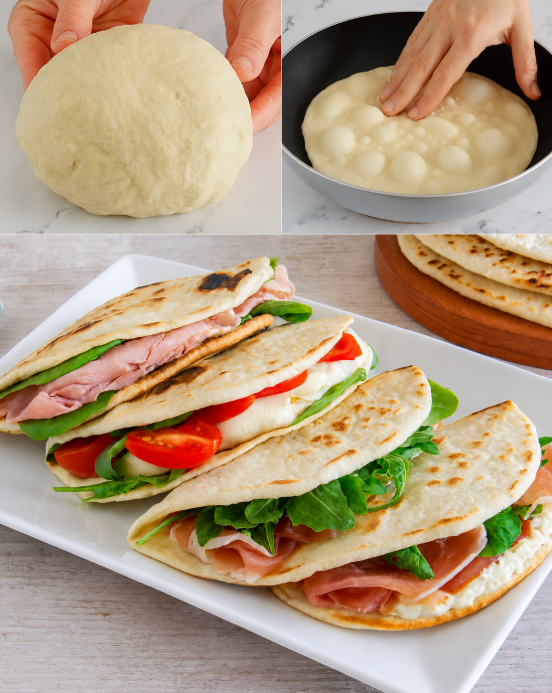
Italian Piadina Recipe: Authentic Italian Flatbread from Romagna
Italian piadina is one of the most iconic street foods in Italy. Soft, thin, flavorful, and incredibly versatile, this traditional Italian flatbread has become famous worldwide for its simplicity and delicious taste. Originally from the Romagna region of northern Italy, piadina is made with basic pantry ingredients such as flour, water, olive oil, salt, and baking soda, then cooked on a hot pan until lightly golden and beautifully soft.
What makes piadina truly special is its versatility. It can be stuffed with cured meats, fresh cheeses, vegetables, grilled ingredients, or even sweet spreads. Whether enjoyed as a quick lunch, an afternoon snack, or a complete dinner, piadina delivers comforting Italian flavors in every bite.
In this complete guide, you will discover everything about authentic Italian piadina, including its history, ingredients, step-by-step instructions, cooking techniques, filling ideas, storage tips, and expert secrets for making the perfect homemade Italian flatbread.
What Is Italian Piadina?
Piadina, also called piadina romagnola, is a traditional Italian flatbread from the Emilia-Romagna region. It is considered one of Italy’s oldest and most beloved recipes.
This rustic bread is:
- Thin and soft
- Cooked on a skillet or flat pan
- Easy to fold
- Perfect for stuffing
- Rich in authentic Italian flavor
Piadina is especially popular as Italian street food because it is quick to prepare and highly customizable.
Traditionally, Italians fill piadina with:
- Raw ham
- Soft cheese
- Fresh vegetables
- Salami
- Mozzarella
- Arugula
Today, modern variations include vegan fillings, seafood, grilled vegetables, and even sweet dessert versions.
The History of Italian Piadina
Piadina has ancient origins dating back centuries. Historians believe this flatbread existed even during Roman times because it was inexpensive and easy to prepare.
Unlike luxurious foods reserved for wealthy families, piadina was considered “poor cuisine” because it used simple and affordable ingredients available in every household.
In rural Romagna, families traditionally cooked piadina on a terracotta pan over open flames. The bread became a daily staple because it was:
- Fast to make
- Filling
- Nutritious
- Ideal for workers and farmers
Over time, piadina evolved from a humble farmhouse recipe into one of the most famous symbols of Italian gastronomy.
Today, piadina can be found:
- In Italian street food shops
- Restaurants
- Cafes
- Food markets
- Home kitchens worldwide
Why Italian Piadina Is So Popular
There are many reasons why piadina has become internationally loved.
Easy to Make
The dough requires only a few ingredients and no complicated techniques.
Quick Cooking Time
Piadina cooks in just a few minutes on a skillet.
Versatile
You can fill it with endless ingredient combinations.
Soft and Delicious
The texture is chewy, tender, and slightly crispy on the outside.
Perfect for Any Meal
Piadina works for:
- Breakfast
- Lunch
- Dinner
- Snacks
- Party food
Authentic Italian Piadina Ingredients
Traditional piadina uses basic ingredients commonly found in Italian kitchens.
500 g All-Purpose Flour
Flour provides structure and softness.
All-purpose flour is ideal because it creates:
- Flexible dough
- Soft texture
- Light chewiness
80 g Extra Virgin Olive Oil
Olive oil gives piadina:
- Rich flavor
- Tender texture
- Authentic Italian taste
Using high-quality extra virgin olive oil makes a significant difference.
1 1/2 Teaspoons Baking Soda
Baking soda helps the dough become softer and slightly airy during cooking.
Unlike yeast bread, piadina does not require long fermentation.
170 g Water
Water hydrates the dough and binds the ingredients together.
For extra softness, some recipes replace part of the water with milk.
A Pinch of Salt
Salt enhances flavor and balances the richness of the olive oil.
Traditional Piadina Fillings
Classic Italian piadina is often filled with fresh and flavorful ingredients.
Raw Ham
Italian prosciutto adds salty and savory flavor.
Fresh Cheese
Soft cheeses such as:
- Squacquerone
- Stracchino
- Cream cheese
- Mozzarella
work beautifully inside warm piadina.
Baby Spinach
Fresh greens add balance, texture, and freshness.
Step-by-Step Italian Piadina Recipe
Making homemade piadina is simple and rewarding.
Follow these detailed instructions for perfect results.
Step 1: Prepare the Dough
In a large bowl, combine:
- Flour
- Olive oil
- Salt
- Baking soda
- Water
Mix the ingredients together until the dough begins forming.
At first, the dough may look rough and uneven, but this is normal.
Step 2: Knead the Dough
Transfer the dough onto a lightly floured surface.
Knead for about 8 to 10 minutes until smooth and elastic.
The final dough should feel:
- Soft
- Flexible
- Smooth
- Slightly elastic
Proper kneading develops gluten, which gives the piadina its characteristic chewiness.
Step 3: Rest the Dough
Divide the dough into 8 equal balls.
Cover them with plastic wrap or a clean kitchen towel.
Let the dough rest for at least 30 minutes.
This resting period is important because it:
- Relaxes the gluten
- Makes rolling easier
- Improves texture
Step 4: Roll Out the Piadina
Using a rolling pin, flatten each dough ball into a thin circle.
The ideal thickness is:
- Thin but not transparent
- Uniform throughout
Traditional piadina is usually:
- About 20 to 25 cm in diameter
Step 5: Cook the Flatbread
Heat a non-stick skillet or flat pan over medium-high heat.
Place one rolled piadina onto the hot surface.
Cook for:
- 2 to 3 minutes per side
You will notice:
- Golden spots forming
- Slight bubbling
- Soft texture developing
Flip once the first side is lightly golden.
Step 6: Keep Warm
As each piadina finishes cooking:
- Stack them on a plate
- Cover with a clean cloth
This keeps them:
- Warm
- Soft
- Flexible
Step 7: Fill and Serve
Spread fresh cheese over the warm piadina.
Add:
- Raw ham
- Baby spinach
- Additional toppings if desired
Fold the piadina in half and serve immediately.
Tips for Perfect Italian Piadina
Use Good Olive Oil
Authentic extra virgin olive oil provides better flavor and softness.
Do Not Overcook
Overcooked piadina becomes dry and stiff.
Cook only until lightly golden.
Rest the Dough Properly
Skipping the resting time makes rolling difficult and affects texture.
Roll Evenly
Uniform thickness ensures even cooking.
Keep Cooked Piadina Covered
This prevents drying out and preserves softness.
Traditional Variations of Piadina
Different parts of Romagna have their own piadina styles.
Rimini Piadina
The Rimini version is:
- Thinner
- Larger
- More flexible
Perfect for wrapping ingredients tightly.
Cesena Piadina
The Cesena style is:
- Slightly thicker
- Softer
- Lower in fat
Whole Wheat Piadina
Healthier variation using whole wheat flour.
Adds:
- Fiber
- Nutty flavor
- More nutrients
Vegan Piadina
Simply avoid animal-based fillings.
Popular vegan fillings include:
- Hummus
- Grilled zucchini
- Eggplant
- Avocado
- Mushrooms
Best Fillings for Italian Piadina
One of the best things about piadina is the endless filling possibilities.
Classic Italian Fillings
Prosciutto and Cheese
The most traditional combination.
Salami and Mozzarella
Rich, savory, and satisfying.
Mortadella and Stracchino
A classic Bologna-inspired pairing.
Healthy Filling Ideas
Smoked Salmon and Avocado
Fresh, creamy, and nutritious.
Grilled Vegetables
Perfect for vegetarians.
Use:
- Zucchini
- Bell peppers
- Eggplant
Chicken and Spinach
High-protein and flavorful.
Sweet Piadina Ideas
Piadina can also become dessert.
Chocolate Spread and Banana
Simple and delicious.
Ricotta and Honey
Creamy and elegant.
Nut Butter and Fruit
Healthy and satisfying.
Difference Between Piadina and Other Italian Flatbreads
Many people confuse piadina with other Italian breads.
Piadina vs Tigella
Tigella is:
- Thicker
- Smaller
- Cooked in a special mold
Piadina is:
- Thinner
- Larger
- More flexible
Piadina vs Focaccia
Focaccia:
- Uses yeast
- Is oven baked
- Has fluffy texture
Piadina:
- Is skillet cooked
- Thin and soft
- Faster to prepare
Piadina vs Tortilla
Although similar in appearance, tortillas typically use:
- Corn flour
- Lard
Piadina uses:
- Wheat flour
- Olive oil
Health Benefits of Homemade Piadina
Making piadina at home allows full control over ingredients.
Benefits include:
- No preservatives
- Fresh ingredients
- Customizable nutrition
- Better quality oils
- Lower sodium options
You can also:
- Use whole wheat flour
- Reduce oil
- Add seeds or herbs
How to Store Italian Piadina
Refrigerator Storage
Store piadina in an airtight container for:
- Up to 2 days
Reheat before serving.
Freezing Instructions
Piadina freezes very well.
To freeze:
- Place parchment paper between each flatbread
- Store in freezer-safe bags
- Freeze up to 3 months
How to Reheat Piadina
Skillet Method
Best for maintaining texture.
Heat for:
- About 1 minute per side
Microwave Method
Quick but slightly softer texture.
Wrap in a damp paper towel before reheating.
Common Mistakes to Avoid
Using Too Much Flour
Excess flour creates dry piadina.
Cooking on High Heat
Too much heat burns the outside before the inside cooks properly.
Rolling Too Thick
Thick dough prevents proper flexibility.
Not Letting the Dough Rest
Resting improves elasticity and softness.
Why Homemade Piadina Tastes Better
Homemade piadina has:
- Fresher flavor
- Softer texture
- Better ingredients
- Authentic aroma
Unlike packaged flatbread, homemade versions contain no unnecessary preservatives or additives.
Serving Suggestions
Piadina pairs perfectly with:
- Italian soups
- Salads
- Antipasto platters
- Grilled meats
- Wine
It is also excellent for:
- Picnics
- Lunchboxes
- Family dinners
- Party platters
Frequently Asked Questions
Can I Make Piadina Without Olive Oil?
Yes, but olive oil gives authentic flavor and softness.
Can I Use Milk Instead of Water?
Yes. Milk makes the dough softer and richer.
Is Piadina the Same as Wrap Bread?
Not exactly. Piadina has a richer flavor and softer texture.
Can I Make Gluten-Free Piadina?
Yes, using gluten-free flour blends designed for bread.
Final Thoughts
Italian piadina is one of the simplest yet most satisfying recipes in Italian cuisine. With only a handful of ingredients, you can create soft, flavorful flatbread perfect for endless meals and snacks.
Its rustic origins, authentic taste, and incredible versatility make piadina a timeless classic loved by people around the world. Whether filled with prosciutto and cheese, grilled vegetables, smoked salmon, or sweet spreads, every variation delivers comfort and delicious flavor.
Homemade piadina also allows you to experience authentic Italian cooking in its purest form: simple ingredients transformed into something extraordinary.
If you are searching for an easy homemade flatbread recipe with authentic Italian flavor, piadina romagnola is the perfect dish to add to your kitchen repertoire.

